
Kalamazoo Community Corrections Role
The Kalamazoo County Office of Community Corrections manages local supervision and program functions. It is not a jail or lockup. A person may report there after a judge permits community release while a criminal case remains pending. The reporting duty is a court-ordered status, not proof that the person finished a sentence or left every form of legal control.
County Community Corrections is also distinct from MDOC parole and probation. Parole follows release from a Michigan prison. Felony probation is a sentence supervised by MDOC and may occur without prison. County pretrial supervision applies before the criminal case is resolved. These groups can have very different records even when their offices share the Healy Street building.
| Status | Responsible system | Best record |
|---|---|---|
| Pretrial supervision | Kalamazoo County Community Corrections and court | Bond or release order and participant instructions |
| State parole | MDOC Field Operations | OTIS status, Date Paroled, and office assignment |
| Felony probation | Sentencing court and MDOC | Judgment, OTIS status, and supervision record |
| Adult jail release | KCSO and issuing court | Booking history, release transaction, and court order |
Kalamazoo Release Program Limits
Community Corrections does not publish a public list of participants and should not be treated as a people-finder. The office can address reporting instructions for a participant who was ordered there, subject to identity and privacy limits. It is not the route for asking whether any named person left Kalamazoo County Jail.
Use the official sheriff inquiry for adult booking history. Uncheck “In Custody,” open the matching booking, and inspect its disposition. Then use the court order to determine whether pretrial supervision was imposed. A blank custody field alone cannot show that someone reports to Community Corrections. It may instead reflect transfer, another release type, lag, or an incomplete record.
The Kalamazoo County released inmate search path separates sheriff, court, MDOC, federal, and immigration records when the correct custodian is not yet clear.
Kalamazoo Pretrial Release Reporting
The county’s pretrial supervision page is for people whom a judge ordered to report after release. It directs that participant to call 269-383-6443 and leave a full name, callback number, case number, and judge’s name. This intake route should be used by the participant as instructed. It is not a public verification line.
- Read the bond or release order and note the court, case number, judge, reporting deadline, and stated conditions.
- Call the participant line with the requested identifying and case details. Use a reliable callback number.
- Record the instructions given by authorized staff, including any appointment, testing, or program direction.
- Contact the issuing court or lawyer if the written order conflicts with an oral instruction or cannot be understood.
- Keep following the court order until the court or authorized program staff changes it through the proper process.
A missed call back does not cancel a court condition. Nor does the end of a jail booking end the underlying case. When a release was on bond or personal recognizance, the person remains subject to the court’s authority and any lawful reporting terms.
Kalamazoo Corrections Records Contact
The Office of Community Corrections is at 1421 Healy Street, Suite 2, Kalamazoo, Michigan. Its general published number is 269-383-6434, and its listed hours are Monday through Friday, 8 a.m. to 4 p.m. The pretrial participant reporting number is 269-383-6443. Use each number for its stated purpose.
Kalamazoo County Office of Community Corrections
1421 Healy Street, Suite 2
Kalamazoo, Michigan
269-383-6434
Monday through Friday, 8 a.m. to 4 p.m.
Pretrial participant reporting: 269-383-6443
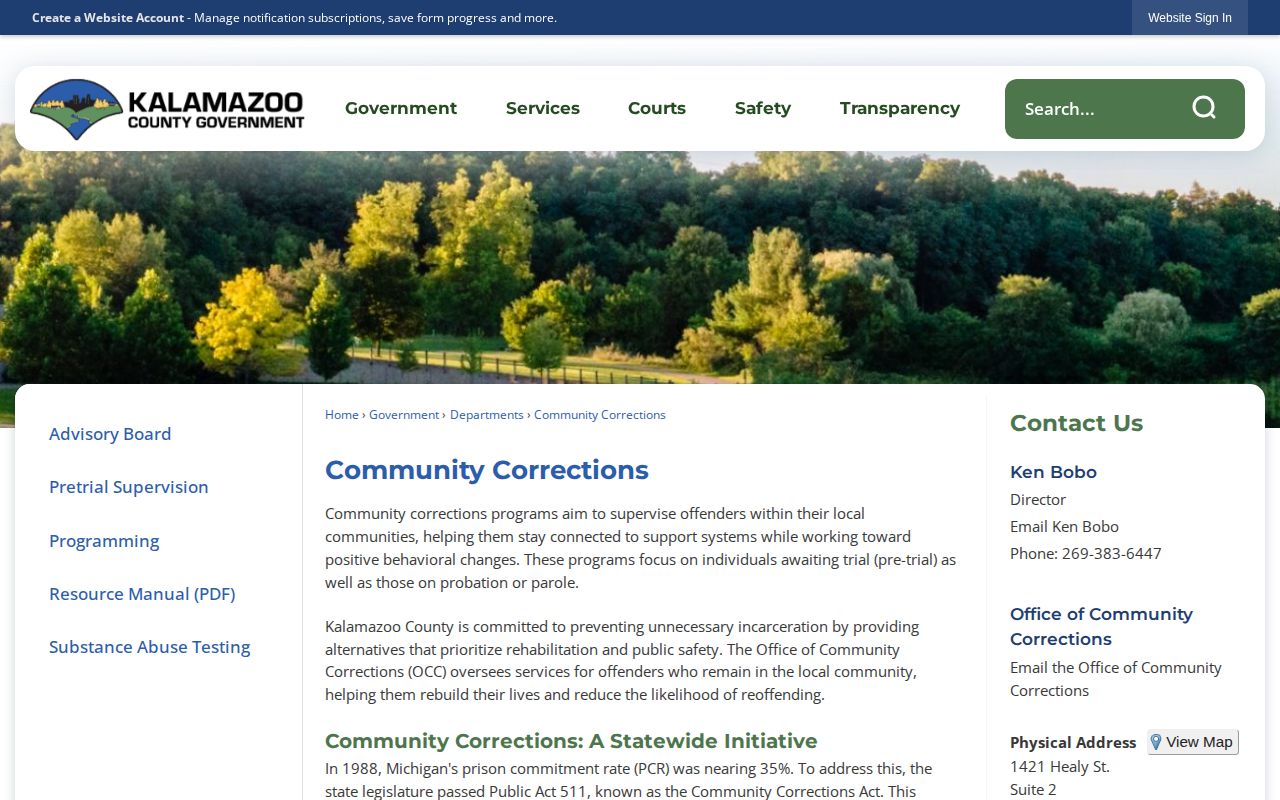
The official Community Corrections source shows the local program and contact information used for this route.
Kalamazoo Release Supervision Offices
Two legally different supervision offices occupy the same address. Kalamazoo County Community Corrections is in Suite 2. MDOC Kalamazoo Parole/Probation is in Suite 1 and uses 269-383-8972. The shared building can cause a person to call the wrong agency, but it does not merge their clients, powers, or records.
A state prisoner released on parole may report to MDOC in Suite 1. A person on felony probation may also have an MDOC field-office assignment. Someone on local pretrial supervision reports under a pending court case through the county office in Suite 2. The sentence or bond order identifies which system applies. Never infer the prior place of custody from the street address alone.
- Pretrial supervision
- Court-ordered community monitoring while a criminal case remains pending.
- Parole
- Conditional release from state prison while MDOC jurisdiction continues.
- Probation
- A court sentence served in the community under stated conditions.
- Discharge
- The end of the supervising authority, which is different from release from a building.
Note: Suite 1 and Suite 2 serve different legal populations even though both offices are at 1421 Healy Street.
Kalamazoo Program Record Requests
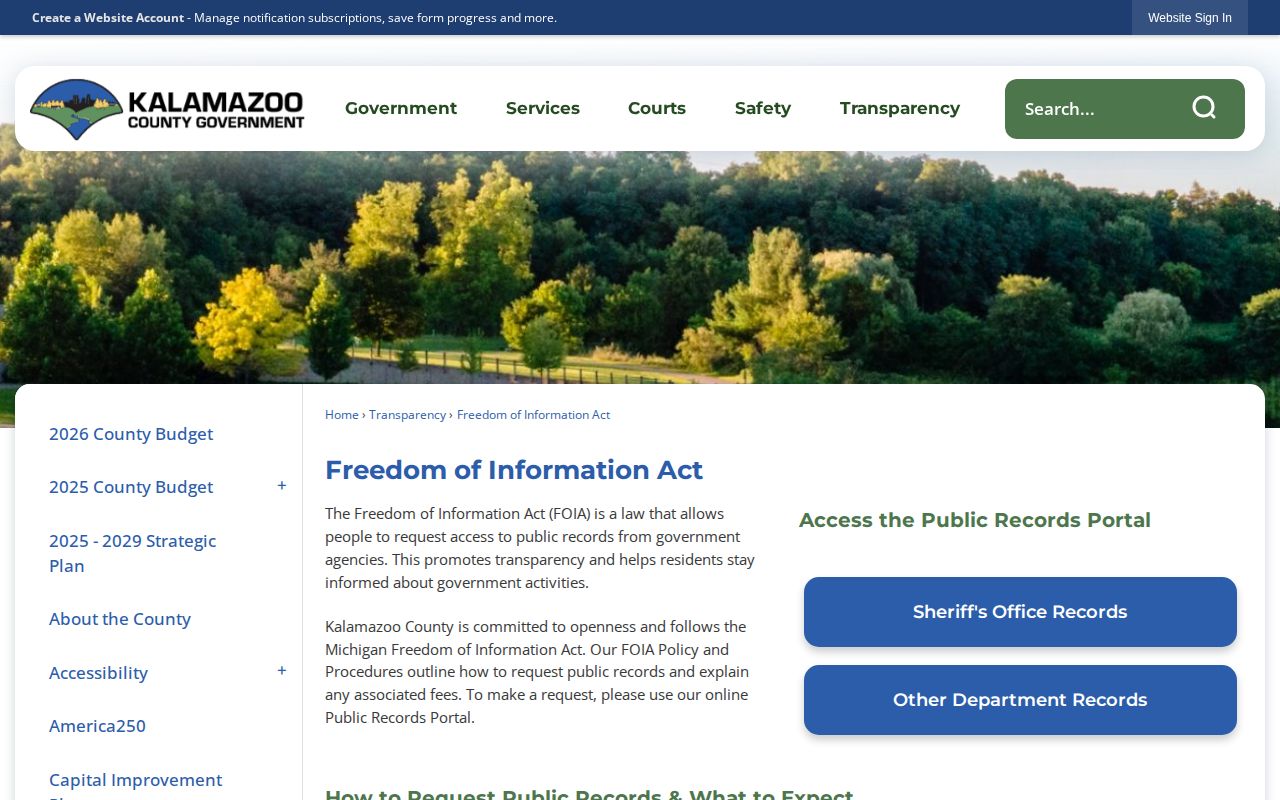
A request for an existing county program record belongs with the county’s official public-record process, subject to exemptions and privacy rules. The Kalamazoo County FOIA page provides the record-request route. Identify the record with enough detail for staff to locate it. Do not ask staff to create a release finding that the office does not maintain.
Program records can contain protected information. Medical, testing, victim, protected-address, juvenile, court-restricted, and active investigative material may be withheld or redacted. Ask for a nonexempt remainder when only part of a document is restricted. Michigan FOIA generally requires a response, partial response, denial, or permitted extension notice within five business days after receipt. That period is not always a final production date.
The county records route shown in the manifest supports the request process.
Verify Kalamazoo Release Elsewhere
A Community Corrections contact is only one piece of a release trail. For a recent jail episode, search the KCSO inquiry with the current-only box unchecked, review the booking disposition, and check the Eighth District or Ninth Circuit court record. Call KCSO Records when the actual exit time, release authority, or transfer destination is needed.
If the court committed the person to state prison, the county roster ended because custody moved. OTIS may show the person after MDOC reception. If OTIS says “Parolee,” Date Paroled confirms physical prison exit while state supervision continues. “Discharged” means MDOC jurisdiction ended. Neither status is created by the county Community Corrections office.
| Question | Correct source |
|---|---|
| Did the adult jail booking end? | KCSO inquiry, jail, court, or sheriff release record |
| Was pretrial reporting ordered? | Bond or release order and Community Corrections participant instructions |
| Did state-prison parole begin? | OTIS Date Paroled and MDOC status |
| Did supervision fully end? | Court discharge order or MDOC discharge record |
Kalamazoo Corrections Program Records
Kalamazoo County states that Community Corrections began in 1990 and describes MDOC-funded alternatives that include pretrial supervision, cognitive programming, and substance testing. The county attributes a prison commitment rate around 11 percent, compared with a state rate just under 20 percent, to its local approach. Those figures are county-attributed program context, not release counts.
The program’s history helps explain why a Kalamazoo jail release may lead to a local reporting requirement. It does not establish that any named person is a participant. Only the case order and authorized office contact can do that. Program success figures also cannot substitute for a person-specific release or supervision record.
The county further notes that most substance tests cost $20 or less. That is a participant program cost, not a fee to search for a released person or obtain a sheriff release record. A participant should confirm the current requirement with authorized program staff. Everyone else should keep the fee separate from KCSO bond charges and from any itemized public-record cost.
Program staff and the court answer different parts of the process. Staff can provide authorized reporting directions for the county program. The judge’s order controls the legal condition. KCSO documents the jail event. Keeping those sources separate yields a clearer record than asking one office to speak for all three.